Archive for September, 2009

Every comma has its day

September 25th 2009

Yesterday was a big day for those of you (us) who notice and cringe at signs with extra or missing apostrophes. If people suggest that makes you a nitpicker, tell them you have nothing on former newspaperman Jeff Rubin, the founder of National Punctuation Day.

Jeff started it as a “celebration of the lowly comma, correctly used quotes, and other proper uses of periods, semicolons, and the ever-mysterious ellipsis.”

Lest you think this is trivial, he points out:

“Casual shortcuts bred by e-mailing and text messaging have no place in school papers or professional business writing. In the business world, words have power and help decision-makers form impressions immediately. Careless punctuation mistakes cost time, money, and productivity.”

and

“It’s not the worst thing in the world if people don’t know how to properly use an apostrophe, but it does say something about them: that they don’t care to learn.”

Want some practice wielding your commas and your colons? Head over to E-WRITE’s 76 online opportunities to build your punctuation skills.

Meanwhile, Grammar Girl Mignon Fogarty held a punctuation contest and has been sharing the entries in her newsletter and podcast. For instance, there were heartfelt odes to the semicolon (”I am in love with your very essence, purpose. / You join two sentences, / Which are independent, and make / Them stronger by bringing them together”) and the ellipsis (”I was putting ellipses where a comma would suffice…ellipses when an em dash would do the trick…ellipses when a yadayadayada would convey the same idea.”).

With that, go forth and use it’s in its proper place.

The writer’s diet includes humble pie

September 20th 2009

This week I had the shocking experience of having someone Not. Like. My. Work.

I say shocking because I’ve been fortunate. Over about 18 years of running my own business, I’ve been able to submit a first draft of my assignments that’s pretty close to what’s required. There may be a bit of back and forth over some wording, but generally, the client is pleased with what I hand in. I’ve received comments like this from happy customers:

  • “You did a good job of capturing the essence of our discussion and the message we were looking to convey.”
  • “I am impressed at how you can take a 20-minute conversation and turn it into an understandable article.”
  • “I can basically provide you with details for a story and you just run with it.”
  • “I am impressed with your skills of listening, selecting the most important information and putting it all together.”

So it was a good reminder to me to stay humble when an article I submitted last week did not fly. The VP who has to approve it did not like it, so I am rewriting it this week. His communications person (who did like the article, fortunately) and I have discussed the areas he flagged as a problem, and one key change that will solve much of them is a new lead sentence/introduction.

What I have learned:

  • This reinforces the importance of one of the tactics I use to turn in a close-to-final first draft. That is, to interview key people involved in the topic I am covering, and ask “what do you want employees to take away from reading this article?” I had asked the VP for 10 minutes to talk about his perspective, but he did not have time.
  • I could have sent a few questions by e-mail, just to confirm the sensitive areas he wanted to avoid or key areas he wanted to highlight.
  • Recognizing that the VP had a new boss, I should have asked about a recent meeting he attended and whether he had commented on the project I was to write about.

I’m starting a new week properly chastened.

Writing from the heart

September 12th 2009

Now, this is expressive writing! Other People’s Love Letters: 150 Letters You Were Never Meant to See (edited by Bill Shapiro), which I commented on recently, has many examples of writing that touches the heart. Here are some that appealed to me:

“I love that you sent me an actual letter. I can feel your hand on the pen, pressing firmly on the paper. Did you moisten the envelope with your lips?”

“If you were here now, I would kiss you. I would hold your hand and look at you with wonder. And then, if you would let me, I would kiss you again. And again. And again.”

“The man of your dreams, perhaps not — maybe just one of the many that have fallen, but for now I am ridiculously happy to be the one who curls himself around you.”

“The first thing I want is a park bench. Wooden, weathered, solid, comfortable. And with a view. Doesn’t have to be of the ocean. Could be a simple garden. Or a squirrel in a tree. Would you sit next to me, on my park bench? Would you take my hand and help me watch that squirrel?”

Besides the romantic interlude, what’s fun about the book is that you see the letters as they were written, on napkins, crumpled paper, e-mail printouts, postcards and scraps of paper. They are scrawled, carefully printed, typed. And at the end, there are comments from some of the people who contributed the love letters, describing how they felt digging them out (”I cried my eyes out,”  “I was completely surprised by how painful it was,” “I saw progress in how I dealt with rejection…”).

The book also includes a section with an update on how some of the lovers met and what happened to them. Some have since married; some dated briefly and then split up. One of the most touching, “Reasons Why I Love Kay” (100 things like “I can be myself when I am with you” and “You’re the one that holds the key to my heart”) was composed as a gift from Don to his wife of 24 years. Not long after, she was killed in a car accident.

When I looked up the love letter book, Amazon helpfully told me that people who bought it also bought PostSecret: Extraordinary Confessions From Ordinary Lives by Frank Warren, which I also talked about. I’m not sure what that says about our voyeuristic tendencies!

Again, the book contains heartfelt messages from ordinary people. In this case, they are all writing a postcard to share a secret they have never told another soul, in response to what began as an art project in 2004. Warren started by handing out 3,000 postcards, but he has now received more than 150,000. The secrets are shared in this book and three others, the most recent being PostSecret: Confessions on Life, Death, and God, (being released Oct. 6), and on www.postsecret.com. The site gets six or seven million visitors every month, and in five years, the PostSecret community has raised $500,000 for suicide prevention.

There are happy or funny secrets:

“I bought a bunch of postcard stamps to use for PostSecret but I used them to write to my friends instead.”

“I stole your duck and took him to San Francisco.” (with a photo of a stuffed duck in hat and overalls)

“Loving you saved my life…”

but more often they are painful, touching, wistful:

“I hope there is a heaven (and I hope you’re there)”

“I wish my parents could see me for what I am…instead of what I didn’t become.”

“I’m 25, and I’ve never been kissed. It’s not that I don’t want to…it’s just that no one else does.”

Warren says, “After seeing thousands of secrets, I understand that sometimes when we believe we are keeping a secret, that secret is actually keeping us.” He relates his own experience, being reminded of a childhood humiliation he had long buried, then writing it on a postcard and walking away from the post office feeling lighter.

“Some of the most beautiful postcards in this collection came from very painful feelings and memories,” he says in the introduction. “I believe that  each one of us has the ability to discover, share, and grow our own dark secrets into something meaningful and beautiful.”

6 things clients want from a writer

September 09th 2009

I turned down an assignment today that wasn’t my area of expertise. Instead, I referred my contact to someone else I knew would do a great job. But it got me thinking, what do clients want from a freelance writer? Here are some things, beyond of course the ability to write:

1.  To know you are an expert in your field.  They don’t want you learning on their project; they want you to ace the job because of your experience and talent.

2.  To know you are committed to your business and will be there when they need you. Even if they aren’t regular clients, people like to know that you will be available to take on the occasional project.

3.  To know they can rely on you to deliver the work you promise. Your expertise (see #1) should allow you to turn in a project that’s close to if not exactly what they need.

4.  To be confident you are working on their projects and moving them forward, even when they don’t hear from you. Better yet, they want to hear from you occasionally in between deadlines with reports on how you’re progressing.

5.  That they can rely on you to meet your deadlines. Even better, that you’ll often or even usually be early. And if, for some reason, you won’t be able to meet the deadline, you’ll warn them early and work out an acceptable Plan B.

6.  That in an emergency, you will pull out all the stops/pull a rabbit out of a hat to turn a project around quickly. Preferably, this isn’t the client’s standard request, or you will certainly be within your rights to charge a higher fee or turn down the work.

A track record at meeting these expectations is what earns repeat business and a solid reputation.

What have I missed?

Life takes action

September 08th 2009

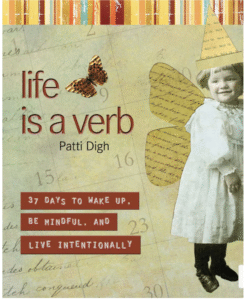
Through the serendipity of the web, I somehow came across a blog called 37 Days. Asheville, North Carolina writer Patti Digh asked the question, “What would I be doing today if I only had 37 days to live?” after her stepfather was diagnosed with lung cancer, and died 37 days later.  She later turned the experience into a book, Life is a Verb: 37 Days to Wake Up, Be Mindful, and Live Intentionally.

I just love how she describes its philosophy:

“Life takes action, not wishful thinking. It takes mindfulness and intention. It takes slowing down and saying yes and being generous and being amazed and loving more.”

Hear, hear.

Have you read it? What did you think?